Skip to content

In May 2012, when Benidorm government officials climbed up the InTempo - the European Union's tallest residential building still under construction - for a photo op, they had an idea. The twin towers joined at the top by a cone were to become a symbol of the post-crisis takeoff of the Spanish city of skyscrapers par excellence.

intempo4 300x255 - Benidorm's prized high-rise tower becomes a symbol of incompetenceBut in late December, with 94 percent of the building completed and 35 percent of units sold, Spain's bad bank, Sareb, announced that it was taking on the loan that a savings bank had extended to the developer eight years ago.

By that time, a construction firm, Olga Urbana, pompously advertised what was going to be "an unquestionable banner of the future." The landmark building would rise meters up into the clouds. The now-defunct Caixa Galicia extended a 92-million euro loan in 2005 - a mortgage that ended up at Nova Caixa Galicia following the merger of Galician savings banks. Now Sareb has assumed the loan for 46 million euros, representing a debt release of 50 percent.

The inauguration was initially scheduled for mid-2009, then pushed back to the summer of 2011. For months, it was evident that no progress was being made at all on the site. But the project's real situation did not emerge until last week, and it is a complex one: although the loan belongs to Sareb, the contract shows that building itself is the property of Olga Urbana, and only a realtor called Maxxima may sell it.
...continue reading "Benidorm’s prized high-rise tower becomes a symbol of incompetence"

1

Reforms to the Coastal Law in Spain are affecting the value of properties and there are reports of a frenzy of activity in some locations.

1110056 51307 1 300x199 - New lease of life for coastal properties in SpainThe changes to the law, which effectively nationalised the whole coast of Spain when it was introduced in 1988, allows refurbishments of homes close to the seafront, and creates a market for longer leases, opening up investment opportunities for those in the know.

Owners of expropriated homes that were legally built before the Ley de Costas were given a 30 year concession of use, effectively a type of lease, many of which were due to expire in 2018.

Now the Ley de Costas has been reformed, extending concessions from 30 years to 75 years and making it legal to buy and sell concessions that before could only be inherited. As a result, concessions are now much more valuable.
...continue reading "New lease of life for coastal properties in Spain"

The Constitutional Court on Thursday ordered a temporary injunction against the controversial anti-evictions decree passed earlier this year by the Andalusian government until it can resolve the constitutionality of the measure.

1019884 15724 1 - Temporary injunction against Andalusia anti-eviction decreeThe Rajoy administration filed a suit against the law on June 28. In its ruling, the top court said it was ordering a temporary halt in applying the decree as a precautionary measure until it can study the case.

The decree, passed by the Socialist regional government of José Antonio Griñán, protected the most vulnerable from being evicted from their homes as a result of foreclosures. It also allowed the Andalusian government to take over any empty property owned by the banks and to let people who have been evicted live there for up to three years. The regional government would pay a nominal rent to the banks.
...continue reading "Temporary injunction against Andalusia anti-eviction decree"

1

This summer the cost of holiday rentals in Marbella has remained the same as last year, in the luxury sector as well as for standard properties. The town has not been affected by the fierce price war which has affected other tourist areas of the province, where the cost of holiday rentals has dropped by up to 20 per cent compared with the summer of 2012.

2426537 938650 foto16716083 300x225 - Marbella’s summer rental prices remain unchangedEstate agents in the Marbella area confirm that prices have remained at the same level, although they point out that the demand differs according to the target market. The most fortunate property owners are those who attract clients from Eastern Europe. Travellers who come from Russia, Ukraine, Kazakhstan and other countries from the former Soviet Union are the most popular this year because they rent the most attractive properties. In fact, they are able to pay an average of between 3,000 and 5,000 euros per week for a villa.

Spanish clients, on the other hand, are very cautious about the price they pay for a holiday rental. The average price a Spanish family is willing to pay, normally for a fortnight, is about 2,000 euros. This is a similar figure to that of last year.
...continue reading "Marbella’s summer rental prices remain unchanged"

The Spanish property crisis and lack of liquidity has increased the amount of properties on offer related to holiday rental businesses such as rural houses for short lets and hostels, it is claimed. Not only has the number increased but also the variety of profiles and business models.

1957771 1062720 foto 1 300x199 - Increase of Spanish holiday rentalThere has been a 200% increase in the number of these types of properties being offered by Spanish vendors to the UK and other international markets. There are two main reasons for this change.

Firstly is a lack of liquidity in the economy in Spain which has forced Spanish business owners to sell their business.

Spain’s new visa for non-Europeans buying property worth over €500,000 is set to spark huge interest from wealthy overseas buyers, it is claimed.

Secondly there has been an increase in expats seeking to move to Spain to start a new life and looking for a property related business. They are finding that there is the opportunity to buy a property at a reasonable price and start using it to earn an income from day one.
...continue reading "Increase of Spanish holiday rental"

1

Nationalized lender Novagalicia has joined BBVA and Cajamar in announcing that it is stripping so-called interest-rate floor clauses from outstanding mortgage contracts, effective as of May 9, the day on which the Supreme Court ruled such conditions to be null and void.

Home in Spain 300x200 - Novagalicia removes interest-rate floor clauses from home loansFloor clauses limit the extent to which borrowers can benefit from falls in the benchmark used to set variable-interest mortgages, which in the case of Spain is habitually the one-year Euribor rate.

The Supreme Court determined that within the context of a mortgage contract as a whole such causes included in the fine print of documents lacked the transparency required by the law.

Novagalicia’s decision affects 90,000 contracts and mortgage debt totaling 6.6 billion euros. The bank said it has ceased to issue home loan contracts since the start of 2011.In a statement to the National Securities Commission (CNMV), Novagalicia said if interest rates remain at their current level, the impact of the removal of floor clauses on its earnings would be 48 million euros, the equivalent of 6.7 percent of its net interest income last year.
...continue reading "Novagalicia removes interest-rate floor clauses from home loans"

3

The ongoing fall in house prices in Spain accelerated in the first quarter of this year as the housing market remained in a five-year-long slump and as banks sought to offload property on their books.

40587 568748 foto7276291 300x200 - Pace of house price deflation picks up at start of the yearAccording to figures released last week by the National Statistics Institute (INE), house prices fell an average 14.3 percent in the period January-March from a year earlier after declining 12.8 percent in the fourth quarter of last year.

New home prices fell 12.8 percent, while the average price of existing homes decreased by 15.3 percent. Prices have now fallen by 39 percent from their peaks toward the end of 2007.

Prices fell across the country, with the biggest drops experienced by the regions of La Rioja (18.0 percent) and Madrid (16.8 percent.)
...continue reading "Pace of house price deflation picks up at start of the year"

The Council of Ministers has just given the go-ahead to a measure which has been anxiously awaited on the Costa del Sol. Foreigners who buy a property for at least half a million euros will be able to apply for a resident’s permit.

56679 1070272 foto 1 300x225 - Buying property for half a million euros will give residence rightsThe measure is included in the proposed law of ‘Support for Entrepreneurs and their internationalisation’ , in the section which deals with attracting talent and investment through a new regime of visas and residence permits.

The law, which the government hopes will come into force on January 1st next year, will make it easier for residence permits to be granted for reasons of economic interests “through a quick and easy process and involving just one authority” for those who meet the criteria, according to information which was given to the press after the Cabinet meeting had finished.
...continue reading "Buying property for half a million euros will give residence rights"

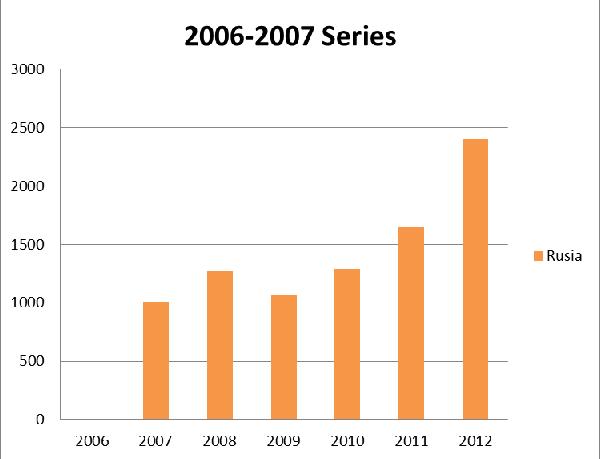
According to the latest “2012 Real Estate Registry Statistics Report”, released by the Official Real Estate Register Bureau, Russian buyers rank third position in number of properties acquired in 2012, shifting place with Germany which moves to fourth place.

Russian demand in our country starts just before the Real Estate bubble began in 2007 in Spain. From that date it has been steadily growing 135% with 1.008 units in 2007 to 2.399 in 2012.

Russian buyers - Russian buyers rank third in 2012 overseas in Spain

...continue reading "Russian buyers rank third in 2012 overseas in Spain"

1

The parliamentary bill to change the rules governing rented accommodation (full name: Ley de Medidas de Flexibilización y Fomento del Mercado de Alquiler de Viviendas) has sparked controversy within the country’s all-important tourism industry.

Flats2 300x225 - Coast holiday rentals under controlThe law will oblige private owners who rent out their properties for short periods of time to meet a series of requirements as well as to comply with the special tourism apartment regulations still to be established by the Junta de Andalucía.

While waiting for the regional authority to draw up this law, and for the central government to define exactly what it considers to be a holiday property, thousands of individual owners have been left wondering what regulations will apply to them.

The potential changes do not just affect a handful of people, but an important sector of the tourism industry. According to the annual financial report produced by La Caixa in 2012, the number of tourists staying in non-official holiday apartments on the Costa del Sol was three times greater than those choosing hotel accommodation. The report states that last year tourists spent 43.1 million nights in properties that are not registered as tourist accommodation, mainly because until now the urban letting law (LAU) has not made this compulsory.
...continue reading "Coast holiday rentals under control"